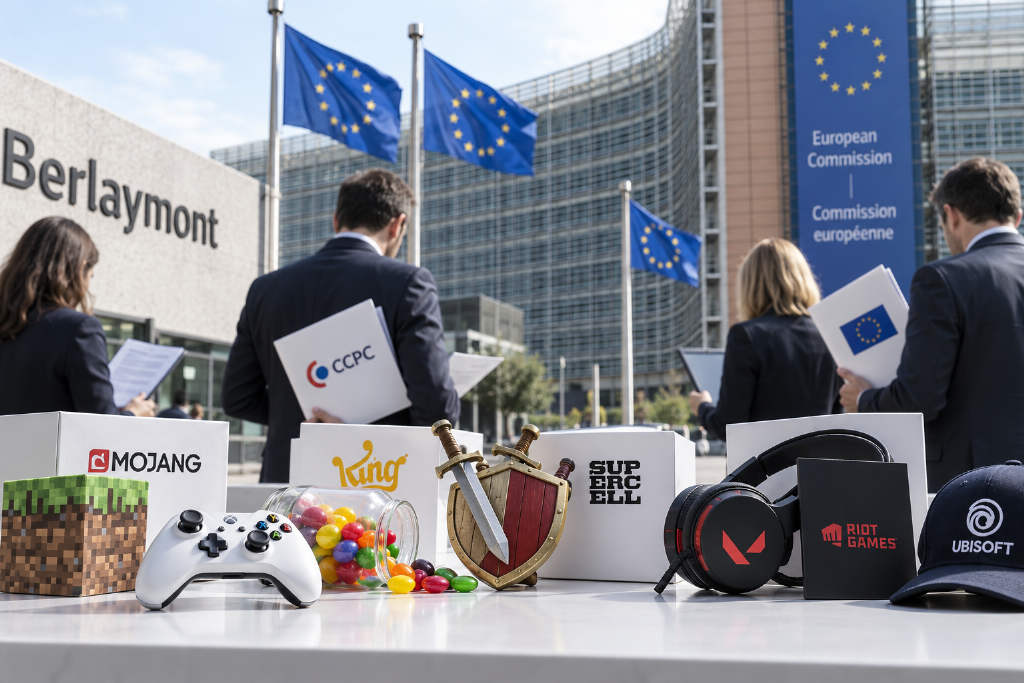
EU regulation2026-10-02 09:10:47EU consumer regulators probe nine game companies over in-game currency practicesEuropean consumer protection authorities have launched a coordinated action against nine video game companies over concerns that their in-game currency practices may breach EU consumer law. The companies named in the action are Crytek, InnoGames, King, Mojang, Plarium, PLR Worldwide Sales, Riot Games, Supercell, and Ubisoft. Games cited in the report include Minecraft, Candy Crush, Clash of Clans, and Valorant. Ireland’s Competition and Consumer Protection Commission announced the move on Oct. 1. The review covers seven areas, including whether prices are shown in real money, how transparent virtual currency conversions are, whether players are exposed to purchase pressure, whether checkout information is clear, whether a 14-day withdrawal right is available, whether terms are fair, and whether children and vulnerable players are adequately protected. EU Commissioner for Consumer Protection Michael McGrath said games must be fair and rules must be followed. Companies that fail to address the issues could face enforcement by national regulators, though no deadline or penalties have been disclosed.40
European Unio2026-10-01 13:22:58EU Opens Coordinated Consumer Actions Over In-Game Currency Sales in 11 Video GamesEuropean consumer authorities have launched 11 coordinated enforcement actions targeting the way 10 video game companies sell and price in-game virtual currencies, according to the European Commission. The cases cover titles including Minecraft, Candy Crush Saga, Valorant, Clash of Clans, Diablo Immortal, and Call of Duty Mobile. The actions are being handled through the Consumer Protection Cooperation Network, a group of national enforcement bodies coordinated by the Commission. The review is tied to principles published in March 2025. Those principles say the real-world price of virtual currency and in-game items must be shown clearly, companies should not use multiple currencies or repeated exchanges to hide costs, and players should not be nudged into buying more currency than they need for a purchase. The guidance also says players retain a 14-day right of withdrawal for virtual currency that has been bought but not spent, and it flags contract terms that let companies unilaterally change currency values or close accounts without challenge. The framework also pays close attention to children, high spenders, loot boxes, dark patterns, aggressive commercial practices, and direct exhortations to children to buy. At the same time, the Commission said cryptocurrencies and similar encrypted digital payment instruments are outside the scope, as are virtual currencies earned only through gameplay and never sold for money.40